Melamine Doors: Durability, Finishes and Care
Melamine doors are among the most common interior doors in apartments and villas because they balance appearance, durability and cost. Yet many buyers are not sure what melamine really is, how it behaves over time or how to look after it. This guide answers those questions simply.
What is a melamine door?
Melamine is a resin used to make a hard, durable surface layer. In doors, decorative paper printed with a color or a wood-look pattern is treated with melamine resin and bonded to a board under heat and pressure. The result is a surface that is part of the finished product rather than a coat of paint. The core underneath is usually an engineered board, and the quality of that board, the bonding and the edge covering all influence how the door ages.
Strengths of melamine
- Hard-wearing surface: it resists everyday scuffs and light scratches reasonably well.
- Color consistency: because the pattern is printed, doors in the same design look the same across a whole apartment.
- Easy to clean: the sealed surface does not need polishing, and most marks wipe away.
- Wide range: you can find plain whites and greys as well as wood-look and textured patterns.
- Good value: melamine is usually an economical way to get a clean, uniform finish across many doors.
Finishes and looks
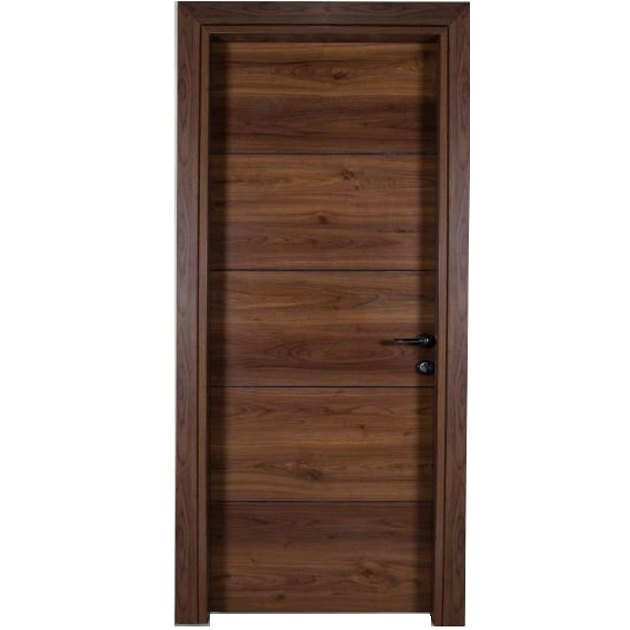
The most popular melamine designs imitate oak, walnut and light woods, while plain colors suit minimal interiors. Some surfaces are smooth and slightly glossy, while others have a matte or lightly textured feel that makes the wood look more convincing and hides fingerprints. When choosing, look at the door in daylight as well as indoor light, because tones can change noticeably, and compare the door with your floor and furniture colors.
Limits and common problems
Melamine is tough, but the weak point is usually the edge. If the edge covering lifts or is damaged, moisture can reach the core and cause swelling, so doors used in wet rooms need especially good edge sealing. Deep scratches and chips are difficult to repair invisibly, and heavy blows can crack the surface. Strong heat sources can also damage the finish. For bathrooms and kitchens with constant humidity, many homeowners prefer PVC or HPL surfaces, and keep melamine for bedrooms, offices and corridors.
| Point | Melamine |
|---|---|
| Everyday scratches | Resists light wear well |
| Moisture | Depends on edge sealing and core quality |
| Cleaning | Soft damp cloth and mild soap |
| Repair | Small chips can be filled; deep damage is hard to hide |
| Best rooms | Bedrooms, offices, hallways, dry areas |
Caring for melamine doors
Wipe with a soft cloth lightly dampened with water and a little mild soap, then dry. Avoid scouring powders, steel wool and strong solvents, which can dull the surface. Clean around the handle where fingerprints gather, and wipe the lower edge if the floor is washed often. Tighten loose screws early so the leaf stays aligned and does not drag.
How to choose what suits your home
- Room: melamine suits bedrooms, offices and corridors; for wet rooms pick a more moisture-friendly surface or ensure full edge protection.
- Climate: in humid or coastal areas, check edge quality and ask how the door resists swelling.
- Budget: melamine is a sensible option when you need many doors with one consistent look at a controlled cost.
- Family: for children's rooms, a textured or matte pattern hides marks better than a glossy one.
- Style: light wood patterns brighten small rooms; darker tones add depth to larger spaces.
- Maintenance: if you want a finish that never needs repainting, melamine fits well.
Visit the Dali shop to see melamine doors in a range of finishes and compare them with PVC, HPL and painted options.