Solid Wood Doors: Advantages, Drawbacks and Who They Suit
Solid wood doors have a special place in many people's imagination: weight, warmth, the grain of real timber and the feeling of quality when you close them. They can be beautiful and long-lasting, but they are not the right answer for every room. This guide explains what they really offer and where they make sense.
What is a solid wood door?
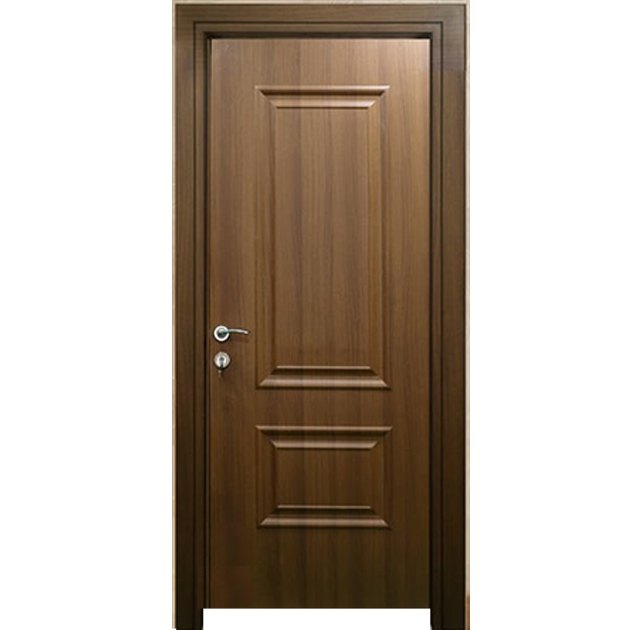
A solid wood door is made mainly from natural timber rather than from boards made of wood fibers. Some are cut from single planks; more often they are built from several pieces joined together, or from a frame with solid panels. Good makers dry the timber properly before building, because moisture left in the wood is a main cause of later warping.
Timbers differ widely in hardness, color and price, so it is worth asking which species is used, whether it is the same wood throughout the leaf, and how the surface was finished and sealed.
Advantages
- Natural character: every piece has its own grain, so no two doors look exactly alike.
- Solid feel: the weight and thickness give a sense of quality and often good sound reduction.
- Repairable: small dents and scratches can usually be sanded and refinished, which is harder on thin surface layers.
- Can be carved or shaped: traditional and classic designs are easier to achieve in real timber.
Drawbacks to know before buying
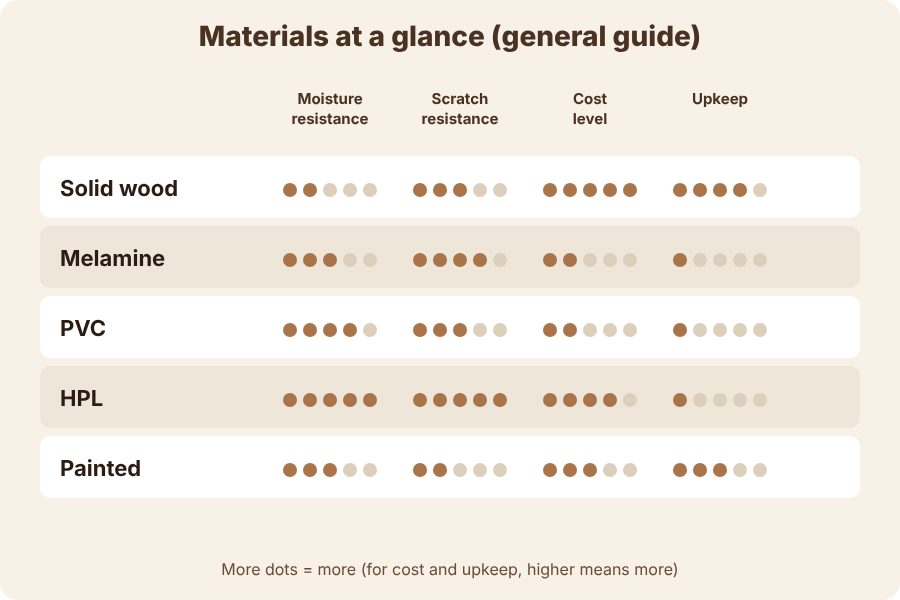
- Movement: wood expands and shrinks with humidity and temperature. In humid rooms or coastal air, a solid door can swell, stick or warp if it is not well made and sealed.
- Weight: heavy leaves put more load on hinges and frames, so the installation must be strong.
- Cost: good timber is usually the most expensive choice, and quality varies a lot between species and suppliers.
- Care: the finish may need re-oiling, waxing or repainting over the years, especially in sunny spots.
Solid wood compared with engineered doors
| Point | Solid wood | Engineered core with surface |
|---|---|---|
| Look | Real grain and depth | Wide range of colors and patterns |
| Stability in humidity | Moves more | Usually more stable |
| Weight | Heavy | Usually lighter |
| Repair | Can be sanded and refinished | Depends on the surface type |
| Typical cost | Higher | Usually more affordable |
Where solid wood works best
Solid wood is a good match for main entrance areas protected from weather, master bedrooms, studies and living rooms where you want a classic, warm atmosphere. It is less ideal for bathrooms, laundry rooms and kitchens, where steam and splashes create constant moisture. In those spaces, a moisture-friendly surface such as PVC or HPL on a stable core is usually the safer, easier choice.
Caring for solid wood
Wipe the surface with a soft, slightly damp cloth and dry it straight away. Avoid harsh cleaners, keep the bottom edge away from standing water, and refresh the finish when it starts to look dull. Small seasonal changes in the gap around the door are normal and are not necessarily a defect.
How to choose what suits your home
- Room: keep solid wood for dry, calm rooms such as bedrooms, studies and halls, and use moisture-friendly doors for wet areas.
- Climate: if you live near the coast or in a very humid building, ask how the wood was dried and sealed, or consider a stable engineered door instead.
- Budget: compare the total cost, including a sturdy frame and quality hinges, not only the leaf price.
- Family: heavy leaves can trap small fingers, so consider soft-close stops or door buffers if children are around.
- Style: choose natural wood if you like classic or rustic interiors; pick a smooth modern finish for minimal designs.
- Maintenance: be honest about how much refinishing you are willing to do over the years.
Browse the Dali shop to compare wood-based doors with PVC, melamine, HPL and painted options for every room in your home.