Anatomy of a Door: Every Part Explained, From Leaf to Lock
A door looks simple, yet it is a small system of parts that must work together every day for years. Knowing the names and jobs of these parts makes it much easier to talk to a carpenter, read a quotation, order a door online and spot problems early.
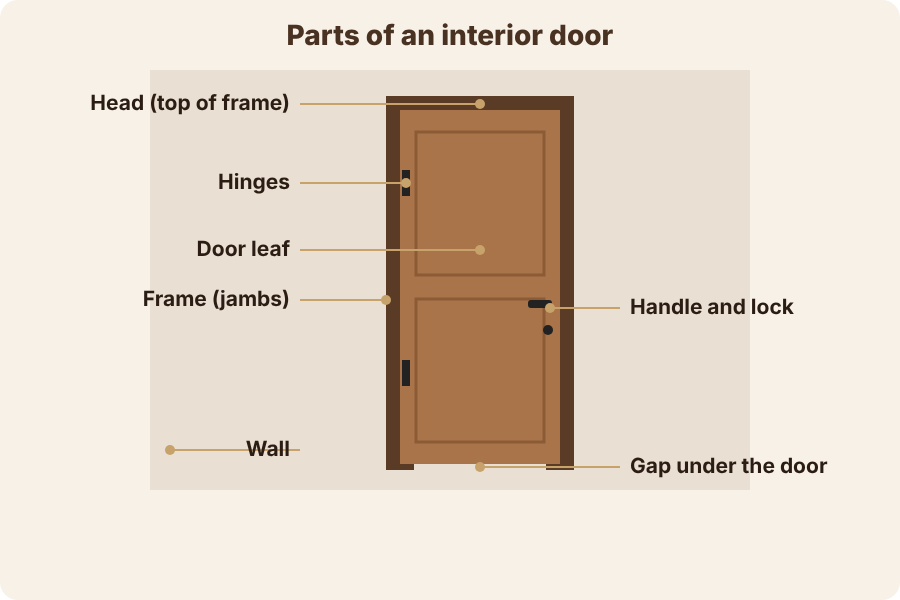
The main parts
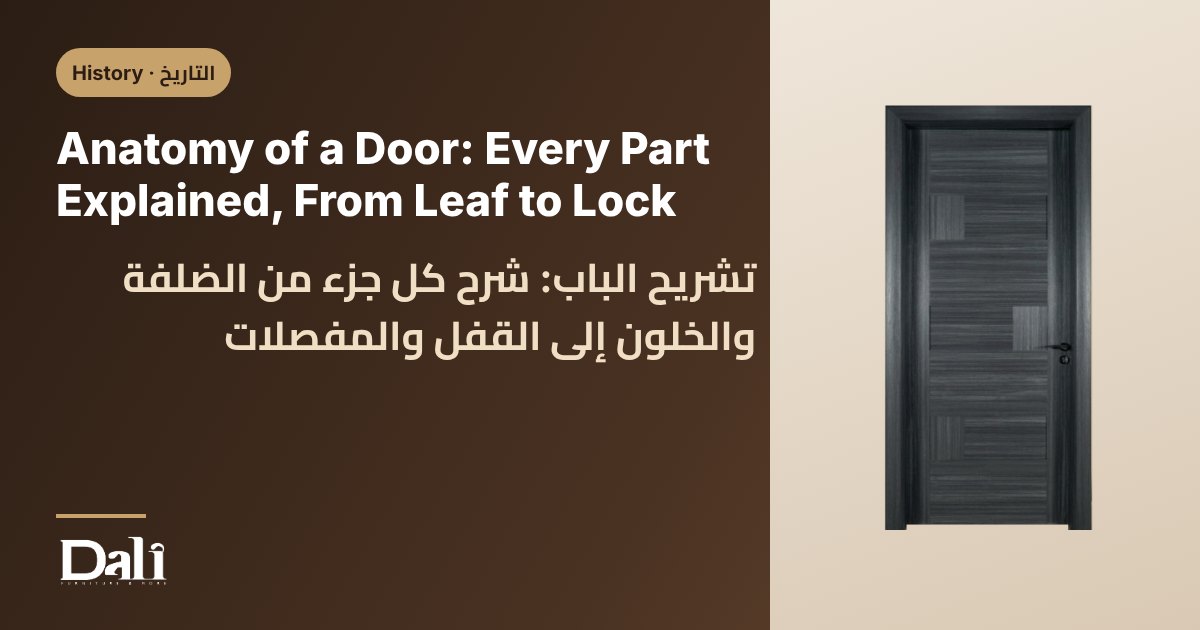
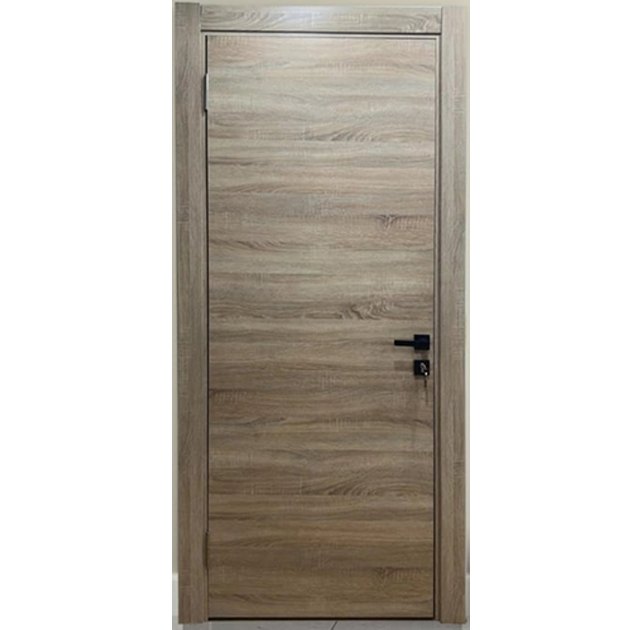
The door leaf is the moving panel itself, the part that opens and closes. The frame, known in Egypt as the khelon or koucha, is the fixed surround set into the wall opening. It has two vertical sides called jambs and a horizontal top called the head. The leaf hangs inside this frame with a small, even gap around it so that it can swing freely, even when the wood or board expands slightly in summer.
| Part | What it does |
|---|---|
| Leaf (الضلفة) | The moving panel that closes the opening |
| Frame / jambs / head (الخلون أو الكوشة) | Fixed surround that carries the hinges and holds the leaf |
| Hinges (المفصلات) | Metal joints that let the leaf swing |
| Lock and latch (القفل) | Holds the door closed and secures the room |
| Handle or knob | Lets you operate the latch comfortably |
| Strike plate | Metal plate in the frame that receives the latch |
| Door stop | Small strip or buffer that limits movement |
| Trim (الكسوة) | Decorative moulding that covers the gap between frame and wall |
Inside the leaf: core and surface
Most modern interior leaves have two layers: a core and a skin. The core gives the leaf its weight, stiffness and sound behavior; common cores include solid timber, boards made from wood fibers, and structures with hollow or filled sections. The skin is the visible surface, such as PVC, melamine, HPL, veneer or paint. The edges of the leaf are sealed or covered so that moisture cannot enter the core, which is especially important in bathrooms and kitchens.
Hinges, locks and handles
Hinges carry the weight of the leaf, so their quality and position matter. Interior doors commonly use two or three hinges, and heavier or taller leaves usually benefit from three. A lock set normally includes a latch that holds the door shut, a handle on each side and sometimes a key or thumb-turn for privacy. For bathrooms, a simple privacy lock is typical; for bedrooms and offices, many people choose a keyed lock. Always check that the lock suits the thickness of the leaf and the style of the handle you like.
Why sizes and gaps matter
Common leaf widths in Egyptian apartments typically fall around 80 to 90 cm, with heights around 200 to 210 cm, although your openings may differ. The frame must match the wall thickness, and the gap between leaf and frame should be even on both sides and at the top. Uneven gaps usually point to a frame that is out of square or a hinge that has loosened.
How to choose what suits your home
- Room: match the lock type to the room, with privacy locks for bathrooms and keyed locks for bedrooms or offices.
- Climate: in humid areas, ask about sealed edges and a frame that resists moisture, because the frame is as exposed as the leaf.
- Budget: spend on solid hinges and a reliable lock set, since these parts take the daily wear.
- Family: with young children, consider soft door stops and handles that are comfortable to reach.
- Style: choose handle and hinge finishes that match your switches, taps and other fittings.
- Maintenance: tighten screws occasionally and keep hinges clean so the door stays quiet and aligned.
Visit the Dali shop to see complete interior doors and choose the leaf, finish and details that fit your opening.