How Doors Evolved in Egypt and the Middle East: From Palm to Engineered Wood
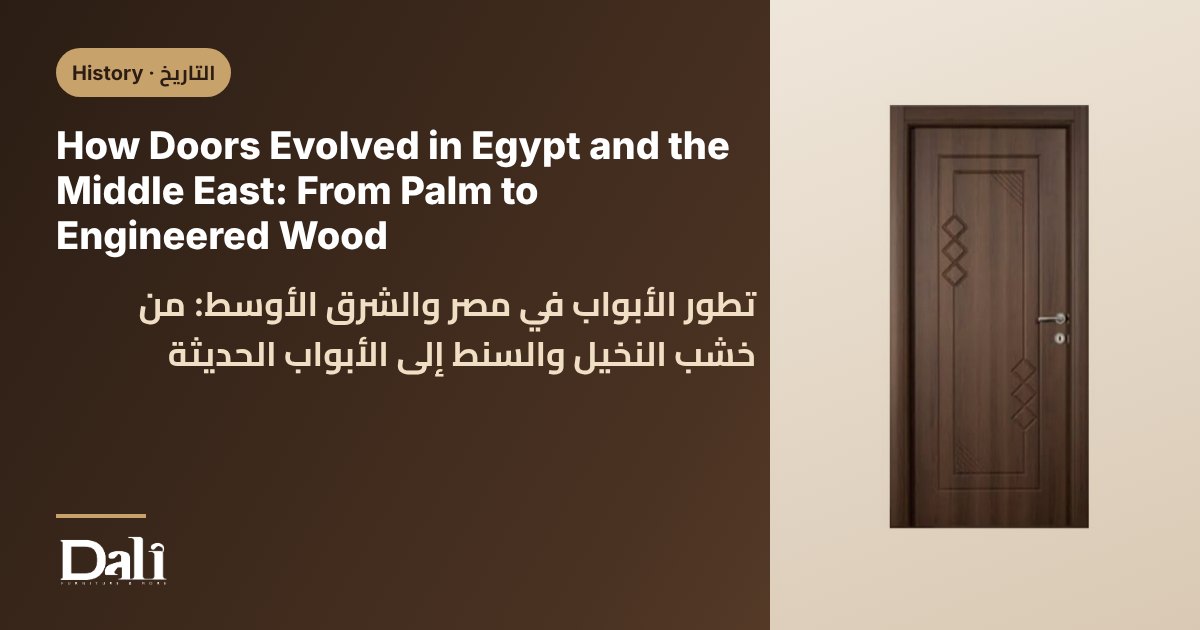
Doors in Egypt and the wider Middle East carry the marks of the land itself: strong sun, dry heat, seasonal humidity near the coast and the Nile, and a constant shortage of good timber. Understanding how builders responded to these conditions helps explain why today's engineered doors look and perform the way they do.
Local woods: palm and acacia
For a long time builders worked with what grew nearby. Acacia, which grows in Egypt, gives hard and durable wood but usually in short, irregular pieces. The date palm was also widely used in rural construction; its trunk is fibrous rather than dense like a typical hardwood, so it was often used for simple doors, roofing beams and rustic fittings. Because long, straight boards were scarce, craftsmen learned to join smaller pieces together, which shaped the look of traditional doors in the region.
Imported timber and decorative craft
As trade expanded, better timber arrived from other regions, and cedar from the eastern Mediterranean is a well-known example in regional history. Wealthy houses, mosques and public buildings in historic cities featured carved and joined wooden doors with geometric patterns, often assembled from many small pieces so the door could resist movement. Latticework screens known as mashrabiya show the same skill: cooling, privacy and decoration in one wooden element. These traditions remain a source of inspiration for designers today.
The twentieth century and the apartment boom
With fast urban growth, more families lived in apartment buildings, and demand for doors rose sharply. Solid timber became expensive and often had to be imported. Manufacturers and workshops turned to plywood, blockboard and later to boards made from wood fibers such as MDF and HDF. These materials are more uniform, easier to cut and less prone to cracking than a single plank, and they accept paint, laminates and plastic films very well.
Today: engineered doors and modern surfaces
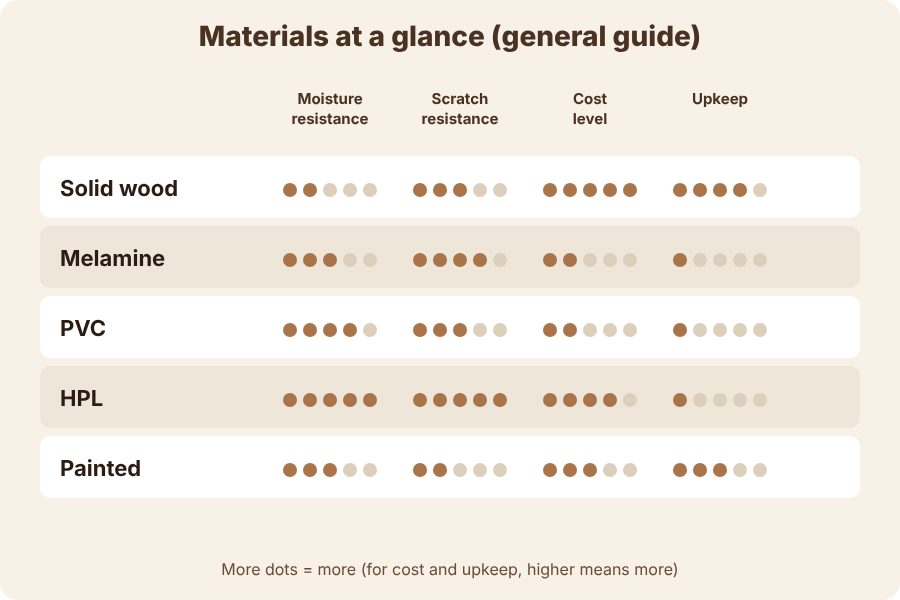
Modern interior doors are usually built from an engineered core covered with a surface layer. The surface is what you see and touch every day, so it matters a great deal.
| Surface | Typical strength | Good to know |
|---|---|---|
| PVC | Resists moisture and is easy to wipe clean | Suits humid rooms and busy homes |
| Melamine | Hard-wearing surface with many colors and wood-look patterns | Popular for apartments and bedrooms |
| HPL | Tough against scratches, knocks and moisture | Often chosen for heavy use areas |
| Painted | Smooth, modern look in a wide range of colors | Can be touched up when needed |
What this history means for you
The old lesson still applies: wood moves with heat and humidity, and a door must be built to tolerate that movement. Engineered cores and protective surfaces are the modern way of doing so, which is why they suit Egyptian apartments, where summers are hot and bathrooms, kitchens and coastal air add moisture.
How to choose what suits your home
- Room: choose moisture-friendly surfaces such as PVC or HPL for bathrooms and kitchens, and let bedrooms and living areas follow your style.
- Climate: in humid or coastal locations, prefer stable engineered doors over bare wood, and make sure edges are sealed.
- Budget: an engineered door with a good surface often gives a better balance of cost and durability than a thin imitation of expensive timber.
- Family: households with children benefit from surfaces that resist scratches and wipe clean quickly.
- Style: if you love traditional character, pick a wood-look or painted door and add classic handles for an oriental touch.
- Maintenance: compare how each finish is cleaned and repaired before you decide.
Explore the Dali shop to see modern doors that carry this long regional craft tradition into today's homes.