Humidity, Heat and Dust in Egypt: How Climate Affects Your Doors
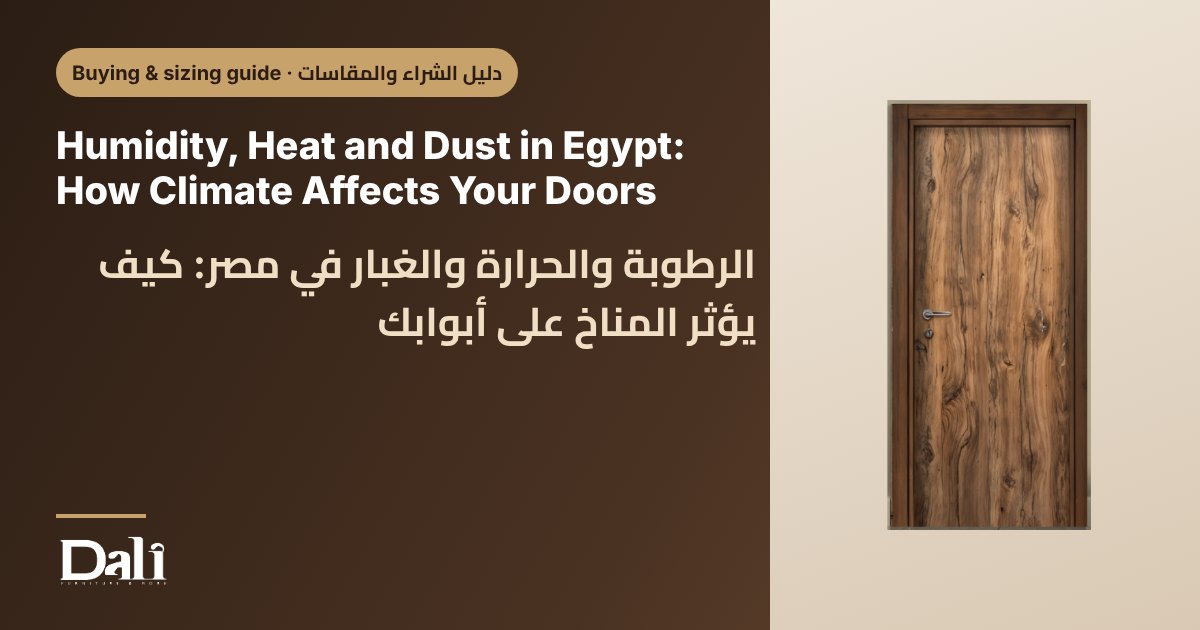
Egypt's climate is not the same everywhere. Coastal cities such as Alexandria and Port Said are generally more humid, Cairo and the Delta have hot summers and seasonal dust, and Upper Egypt is typically hotter and drier. Doors respond to all of this. Understanding what humidity, heat and dust do helps you pick the right material and keep it in good shape.
Humidity: the biggest enemy of wood-based doors
Wood and wood-based boards absorb and release moisture with the seasons. When a leaf takes on water, it can swell, stick in its frame or lift at the edges. The most exposed places are:
- Bathrooms and kitchens, where steam and splashes are daily.
- Rooms near the coast or on lower floors.
- Apartments with leaking pipes, damp walls or poor ventilation.
- The bottom edge of every door, which meets wet mopping water.
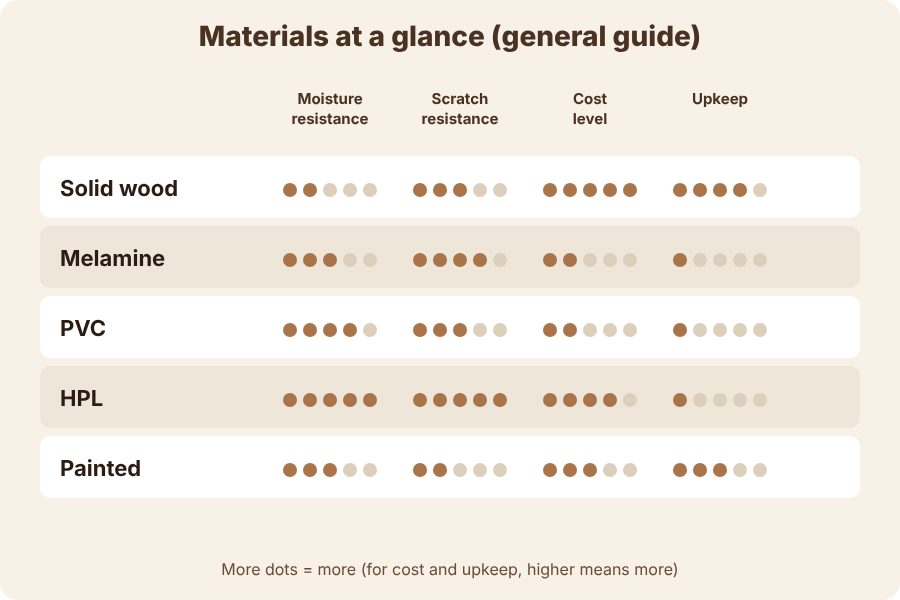
Sealed surfaces and well-protected edges slow moisture down. That is why PVC and HPL are commonly chosen for humid rooms, while the edges of any wood-based door should be kept dry and sealed.
Heat and sun
High temperatures and direct sunlight cause different problems. A door that sits beside a sunny balcony or a glass wall can fade, and uneven heating of the two faces can encourage warping. Heat can also soften some plastic surfaces and weaken certain adhesives over time if it is extreme. Practical steps include:
- Using curtains or shading where sunlight falls directly on a door.
- Keeping heaters, ovens and hot appliances away from door surfaces.
- Allowing some air movement so rooms do not get trapped heat.
Dust and sand
Dust is a fact of life in many Egyptian cities, especially during windy seasons. On doors it settles on edges, grooves and hardware. A fine layer is harmless, but dust mixed with moisture can make a sticky film, and grit in the hinges makes them wear and squeak. Smooth finishes are easier to wipe than deeply textured ones, and a regular dry wipe of the top edge and hinges helps a lot.
How each finish tends to cope
| Finish | Humidity | Heat and sun | Dust |
|---|---|---|---|
| PVC | Generally good | Avoid direct flame and very hot sources | Smooth, easy to wipe |
| Melamine | Fine in dry rooms, edges need care | Generally stable indoors | Easy to wipe |
| HPL | Generally good | Hard-wearing indoors | Easy to wipe |
| Painted | Needs good sealing | Strong sun may fade some colors | Wipe gently to protect paint |
Simple protection habits
- Ventilate bathrooms after showers and use an extractor fan if you can.
- Wipe spills from the lower part of the door straight away.
- Do not wet-mop heavily against the base of the leaf.
- Keep a small gap at the bottom for air circulation, as the carpenter usually leaves.
- Dust hinges and top edges every few weeks.
How to choose what suits your home
- Bathrooms, kitchens and coastal homes: look first at PVC or HPL and insist on sealed edges.
- Sunny rooms: consider shading, and choose colors and finishes that handle light well.
- Dry bedrooms and living areas: melamine and painted doors are comfortable choices if kept clean and dry.
- Dusty locations: favor smooth surfaces and simple profiles that are easier to wipe.
- Budget: put the more moisture-resistant finish where it matters, in wet areas, and use other finishes elsewhere.
Browse the Dali shop to match the right finish to each room in your home.