Door Maintenance and Cleaning: What Works for Each Material
Interior doors are touched every day, yet they are often forgotten when we clean. A little regular care keeps them looking good for years, but the right method depends on the surface. A cleaner that is perfect for one finish can dull or damage another. Here is a practical guide for the finishes most common in Egyptian homes.
General rules for every door
- Start with a dry or slightly damp soft cloth to remove dust. Dust is slightly abrasive, so wiping it dry first avoids scratching.
- Use mild soapy water for marks, then wipe with a clean damp cloth and dry immediately.
- Avoid scouring pads, steel wool and strong abrasive powders on any finish.
- Avoid soaking the door. Water that runs into edges and joints is the main enemy of wood-based leaves.
- Test any new product on a hidden spot, such as the hinge side, before using it on the whole door.
Cleaning guide by material
| Finish | Best way to clean | Avoid |
|---|---|---|
| PVC | Damp cloth with mild soapy water, then dry | Strong solvents, thinners, very hot water and sharp tools |
| Melamine | Slightly damp soft cloth, dried right away | Soaking the edges, harsh abrasives |
| HPL | Mild detergent and a soft cloth | Scratching with hard objects, strong acids |
| Painted | Very gentle wiping with a soft damp cloth | Rubbing hard, strong chemicals that lift the paint |
Notes on each finish
PVC
PVC is generally easy to wipe and tolerates humidity well, which makes it popular for bathrooms and kitchens. Keep it away from direct flames, hot appliances and strong solvents, which can mark or soften the surface.
Melamine
Melamine surfaces are practical and fairly resistant to everyday marks, but the edges are the weak point. Wipe splashes quickly and do not let water sit at the bottom of the leaf.
HPL
HPL is a hard-wearing laminate that usually handles daily cleaning easily. Even so, a sharp key or a dragged piece of furniture can scratch it, so a little care at the lower part of the door pays off.
Painted doors
Painted finishes give a refined look but are the most sensitive to rubbing. Clean gently, deal with fingerprints early, and keep a small amount of matching paint for touch-ups if you can.
Hardware and hinges
Wipe handles and locks with a damp cloth since they collect the most fingerprints. Once or twice a year, tighten loose screws and apply a small amount of suitable lubricant to the hinges and latch if they begin to squeak. Wipe off any excess so it does not stain the door.
A simple routine
- Weekly: dust with a dry soft cloth.
- Monthly: wipe with mild soapy water around the handle and edges, then dry.
- Twice a year: check hinges, screws and the gap around the leaf, and clean the top edge where dust gathers.
How to choose what suits your home
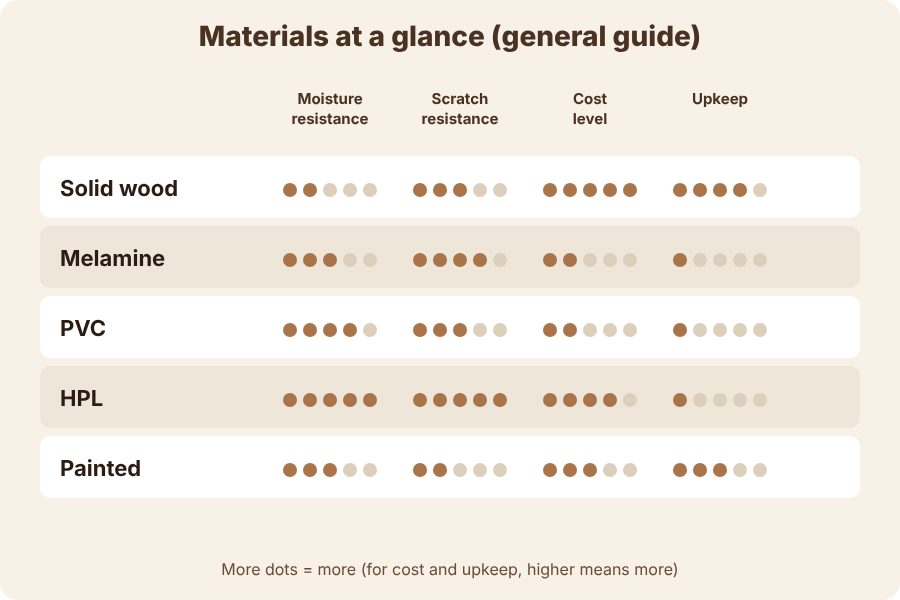
- Busy family rooms and kids' rooms: choose finishes that tolerate frequent wiping, such as HPL, PVC or melamine.
- Bathrooms and kitchens: prefer moisture-friendly finishes and keep the door base dry.
- Dusty areas or ground floors: smooth surfaces are easier to wipe than heavily textured ones.
- Low-maintenance preference: avoid delicate painted surfaces on high-traffic doors, or accept occasional touch-ups.
- Light colors: they look elegant but show marks faster, so plan on a slightly more regular wipe.
To find a door whose finish matches the way you live and clean, take a look at the Dali shop.