Who Invented the Door? From Ancient Egypt to Modern Homes

Ask who invented the door and you will not find a name in any reliable record. The door is one of those everyday objects that grew slowly, shaped by countless builders who solved the same problem: how to open a wall when you need to and close it when you do not. Here is the story as far as history can tell it.
Why there is no single inventor
No single person is recorded as the inventor of the door. Early people needed to close the entrance of a home against wind, animals and strangers, and they used whatever was at hand. Many historians assume the earliest closures were simple coverings such as animal hides, woven mats or heavy stones rolled across an opening. Because these materials rarely survive, we know little about them, and it is safer to say that the door developed gradually in many places at once.
Doors in ancient Egypt
Ancient Egypt gives us some of the best evidence of early wooden doors. Wood was not abundant along the Nile, so good timber was valued, and doors were often made of joined planks held together by cross pieces. Many doors turned on a pivot, with a peg at the top and bottom of the leaf sitting in sockets, rather than on the hinges we know today. Wooden bolts were used to secure them, and the Egyptians are often mentioned in discussions of early lock mechanisms based on wooden pins. Tombs and temples also show carved or painted false doors, which carried symbolic meaning and were not meant to be opened.
From bronze hinges to panel doors
Later civilizations refined the idea. Metal fittings, including bronze hinges and fixings, appear in the ancient Mediterranean world, and large double doors became a sign of important buildings. In medieval times, plank doors strengthened with iron straps were common. Over the following centuries, carpenters developed the panel door, where a frame holds thinner panels that can move slightly as wood swells and shrinks. This was an important step because it reduced warping and saved timber.
The modern door
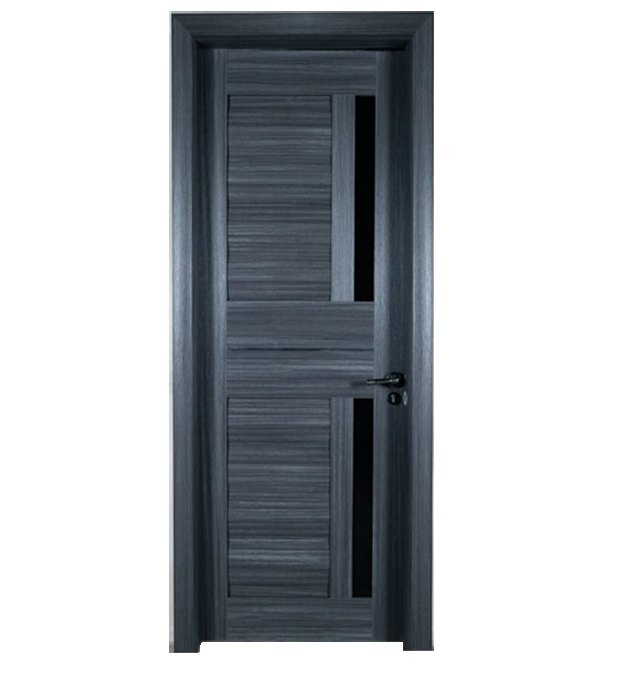
The last century changed doors more than the previous thousand years. Factories began producing hinges, locks and standard sizes in large numbers. Flat, smooth flush doors became popular, and manufactured boards and surface layers made doors lighter, more stable and more affordable. Today the market includes several families of interior doors.
| Era | Typical door |
|---|---|
| Early settlements | Hides, mats or stone covering an opening |
| Ancient Egypt | Joined wooden planks, pivot turning, wooden bolts |
| Medieval period | Plank doors with iron straps |
| Later centuries | Panel doors in framed construction |
| Today | Engineered cores with PVC, melamine, HPL or painted finishes |
What history teaches us about choosing a door
Across all these periods the same questions return: how strong is it, how well does it handle moisture and movement, and how does it look? Modern PVC, melamine, HPL and painted doors are simply the current answers to those old questions, built for apartments and villas where humidity, dust and heavy daily use are part of life.
How to choose what suits your home
- Room: bathrooms and kitchens need finishes that tolerate moisture, while bedrooms and offices can focus on look and sound comfort.
- Climate: humid areas and coastal cities reward doors that do not swell easily, so ask about the core and the surface layer.
- Budget: decide on a range first, then compare finishes within it instead of chasing the most decorative option.
- Family: children and pets mean more knocks and fingerprints, so choose a surface that wipes clean.
- Style: match the door color and finish to your floors and walls so the home feels consistent.
- Maintenance: think about how much care you are willing to give; some finishes need only a damp cloth.
Browse the Dali shop to see modern interior doors and find the finish that carries this long story into your own home.