How to Measure Your Door Opening Correctly

Most door problems begin before the door is made: with a rushed or inaccurate measurement. A few millimetres of error can leave a door that rubs the frame, a gap you can see across the room, or a frame that will not fit the wall. The good news is that measuring is simple if you follow a clear routine and write everything down.
What you need
- A rigid metal tape measure, not a soft sewing tape.
- A spirit level or a long straight edge.
- A pencil and paper, or your phone, to record each number.
- A helper for tall openings, if possible.
Step by step
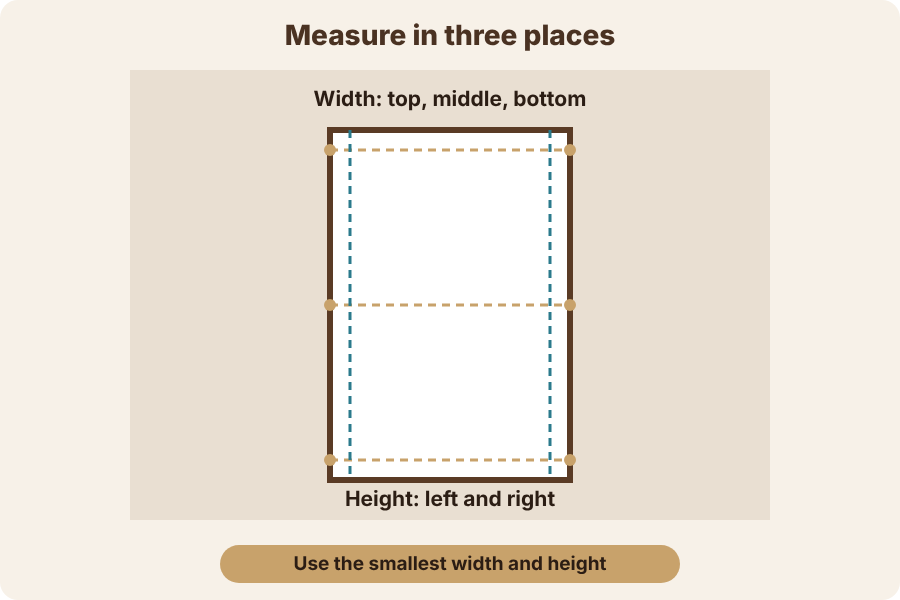
Step 1: Measure the width in three places
Walls and old frames are rarely perfectly straight. Measure the width of the opening at the top, the middle and the bottom, then write down all three. If they differ, use the smallest figure as your reference for the clear opening, and mention the differences to your supplier. Typical interior door leaves are often around 80 to 90 cm wide, but older apartments and special rooms can be narrower or wider.
Step 2: Measure the height on both sides
Measure the height on the left, the right and, if you can, the centre. Typical leaf heights are often around 200 to 210 cm, though your opening may be different. Remember to note where the final floor level will be. If tiles, wood flooring or a carpet are still to be installed, the finished floor will be higher than the bare slab, which changes the available height.
Step 3: Measure the wall thickness
The frame (khalon) must match the thickness of the wall, including plaster or tiles on both sides. Measure from one finished face of the wall to the other at several points. Different thicknesses are common in the same home, for example between a bathroom wall with tiles and a bedroom wall with paint only.
Step 4: Check that the opening is square
Hold the level against the side of the opening to check that it is upright. Then measure the two diagonals from corner to corner. If the numbers are almost equal, the opening is close to square. A large difference means the frame will need careful fitting or the opening should be corrected before installation.
Step 5: Note the surroundings
Record which way you want the door to swing, the position of light switches, and whether any furniture or radiators are close. Take a photo of the opening with the tape visible; it helps later when you discuss details.
Common measuring mistakes
- Measuring an old door leaf instead of the opening itself.
- Forgetting the future floor thickness.
- Using only one measurement for width or height.
- Ignoring plaster or tiles that are not finished yet.
Before you confirm the order
Read your numbers back once more and compare them with the supplier's required details. Ask whether they need the wall opening, the finished clear opening or the wall thickness, and give each one clearly labelled. If the work is still under construction, it is wise to re-measure after plaster, tiles and flooring are finished, because these layers change every dimension. Keep a simple sketch of each door with its room name, the swing direction and the figures, so nothing gets mixed up when you order several doors at once.
How to choose what suits your home
- Room: bathrooms and kitchens often have tiles on the wall, so measure the wall thickness after tiling, or allow for it.
- Climate and humidity: leave a sensible working gap around the leaf, since wood-based materials can move slightly with seasonal humidity.
- Budget: accurate measurements are free and prevent costly remakes, so spend extra time here rather than later.
- Family: if someone uses a wheelchair or a walker, choose a wider clear opening so passing through is comfortable.
- Style: a taller door can make a room feel more elegant, if your wall height allows it.
- Maintenance: a door that fits well with even gaps wears less and needs fewer adjustments.
Once your measurements are ready, browse the Dali shop and choose the door that fits your opening.