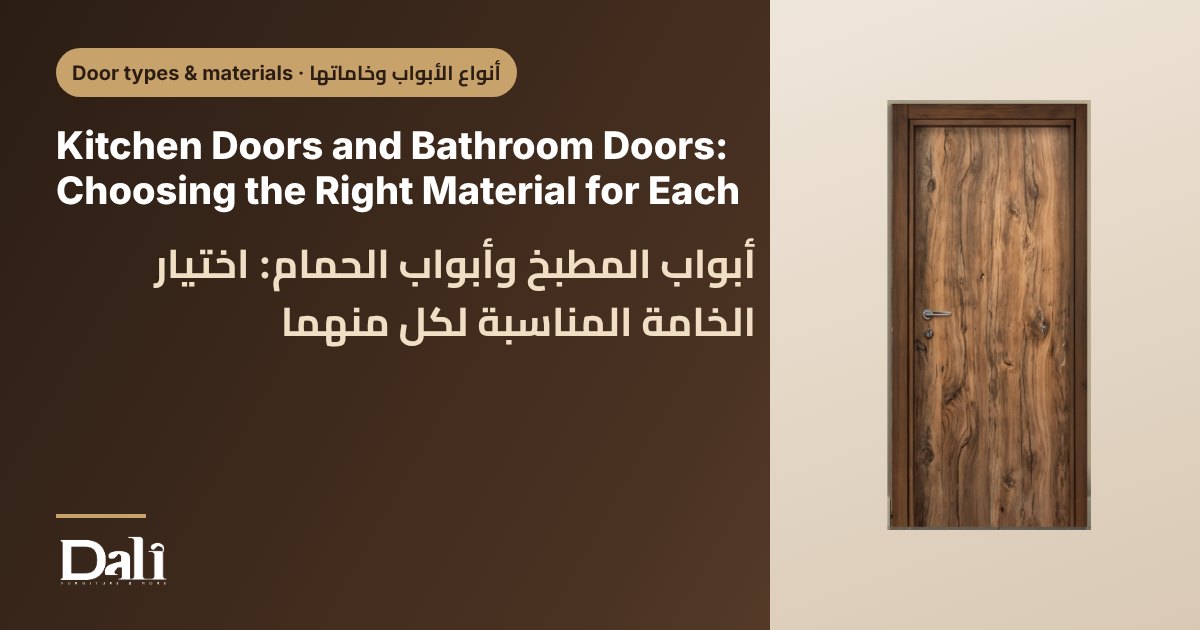
Kitchen Doors and Bathroom Doors: Choosing the Right Material for Each
Kitchens and bathrooms look like similar "wet" rooms, but they challenge a door in different ways. A bathroom mostly deals with steam and splashes; a kitchen adds heat, grease, odours and heavy daily traffic. Choosing the same door for both is a common mistake, so it helps to match the material to the actual conditions.
What a bathroom door faces
- Humidity and steam: repeated, often several times a day, especially after showers.
- Direct splashes: particularly at the bottom edge and around the handle.
- Limited ventilation: many Egyptian bathrooms have only a small window or an extractor.
- Cleaning products: frequent contact with soap and cleaners.
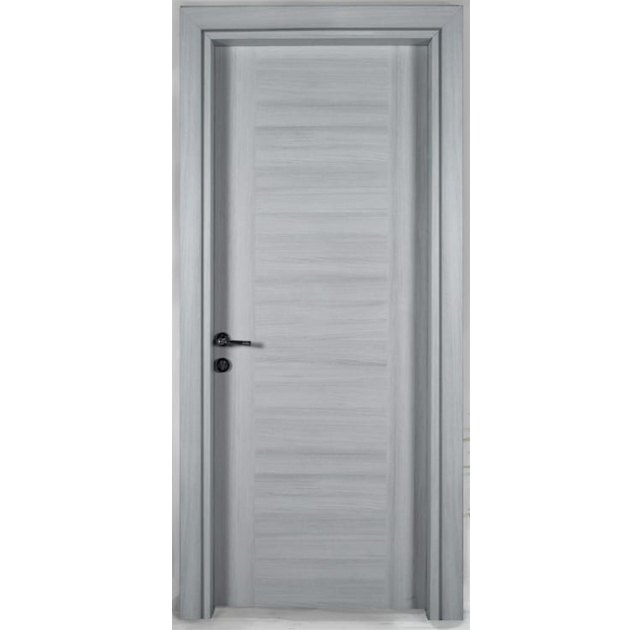
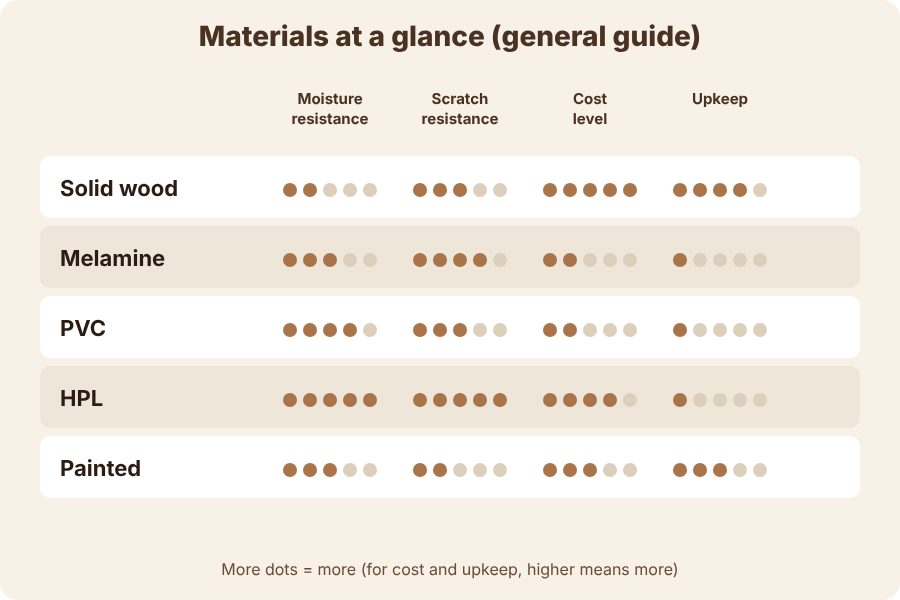
The best answer here is a leaf whose surface and core resist water. PVC doors are widely used for this reason: the sealed surface does not swell, and wiping is easy. Use stainless or corrosion-resistant hinges and seal any holes drilled for the lock.
What a kitchen door faces
- Heat and steam from cooking: generally less constant than in a bathroom, but intense near the stove.
- Grease and smell: airborne fat settles on the nearest surfaces and needs regular cleaning.
- Traffic: doors are opened with wet or full hands and are more likely to be knocked.
- Safety: doors that open into a cooking area should not swing into someone carrying hot pots.
For kitchens, durable and wipeable surfaces such as HPL, PVC or well-finished melamine are practical choices. Painted doors can work too, if the paint is of a good washable type and the edges are well sealed.
Material comparison for these rooms
| Material | Bathroom | Kitchen |
|---|---|---|
| PVC | Excellent; sealed and water-resistant | Very good; easy to wipe |
| HPL | Good with sealed edges | Very good; hard-wearing and easy to clean |
| Melamine | Fair; edges are the weak point | Good if edges are well sealed and kept dry |
| Painted | Depends on core and paint quality | Good with washable paint and sealed edges |
| Untreated wood | Not recommended | Not ideal without strong protection |
Details that matter more than you think
- Edges: water and grease get in at the edges first, so well-banded or sealed edges are important.
- Bottom gap: leave a small clearance for airflow in the bathroom and to keep the leaf away from standing water.
- Glazing for kitchens: a frosted or half-glass panel brings light and helps you see someone approaching.
- Handles and hardware: choose corrosion-resistant finishes in wet rooms, and smooth shapes that clean easily in kitchens.
- Ventilation: an extractor fan or window extends the life of any door.
Daily habits that extend door life
Dry the bottom edge after mopping, run the extractor or open the window after showers, and wipe the area near the kitchen handle weekly before grease builds up. Avoid harsh cleaners and rough scourers, which scratch the surface and make it easier for dirt to cling. These small habits keep any door looking good for longer.
How to choose what suits your home
- Room: prioritise PVC for the bathroom; for the kitchen choose HPL or PVC if cooking is heavy.
- Climate and humidity: poorly ventilated or coastal homes should use the most water-resistant option throughout.
- Budget: PVC is usually economical for both rooms; keep costlier finishes for living spaces.
- Family: with children, pick rounded, easy-to-clean surfaces and a door that cannot swing into the cooking area.
- Style: a matching finish across the home looks tidy; vary the colour only slightly if you want wet rooms to stand out.
- Maintenance: wipe regularly, dry the lower edge, and check hinges and screws every few months.
Browse the Dali shop to compare PVC, HPL, melamine and painted doors for your kitchen and bathroom.