Popular Wood Species for Doors: Oak, Beech, Pine, Teak and More
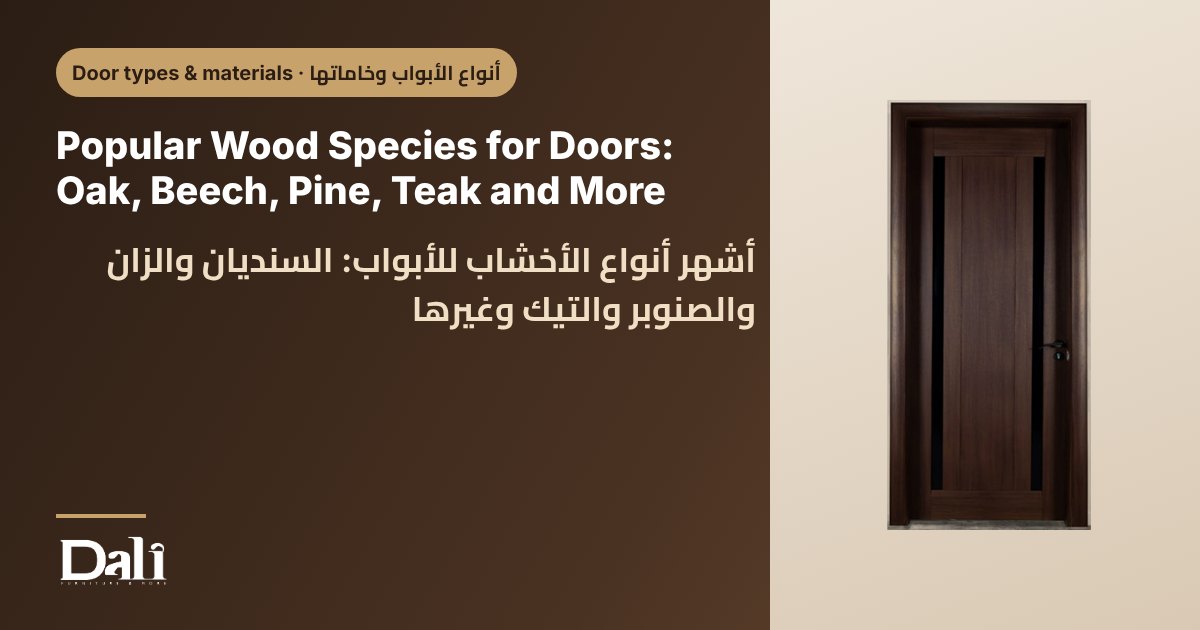
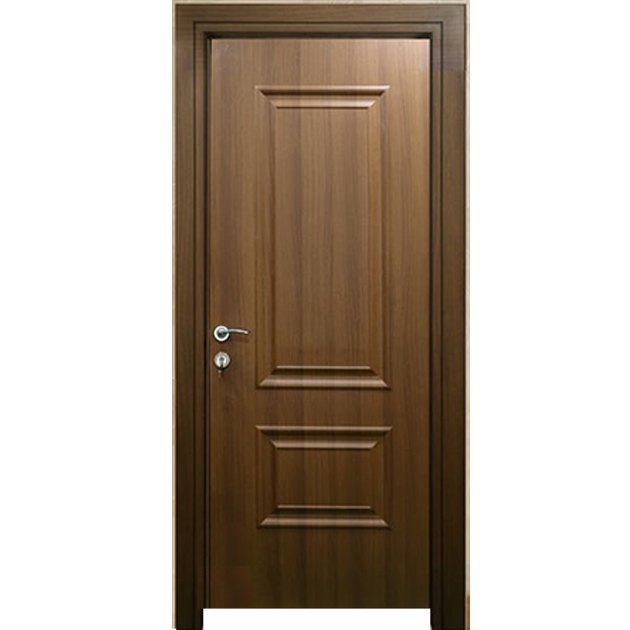
Wood is still the benchmark for beauty and character in doors. But not all timber behaves the same way: some species are hard and stable, others soft and easy to work, and some resist moisture far better than others. Knowing the main species helps you read a specification and judge whether a wood-look door is right for your room.
Hardwoods and softwoods in short
Botanically, hardwoods come from broadleaf trees and softwoods from conifers. The words do not always reflect actual hardness, but in general hardwoods such as oak and beech are denser and more resistant to dents, while softwoods such as pine are lighter, cheaper and easier to cut, yet mark more easily.
Popular species and what they offer
| Wood | Character | Notes |
|---|---|---|
| Oak | Pronounced grain, golden to light brown | Hard, strong and long-lasting; a classic choice for solid doors |
| Beech | Fine, even grain, pale colour | Hard and smooth; takes stain and paint well; sensitive to humidity swings |
| Pine | Light colour, visible knots | Economical and light; dents more easily; good for painted or rustic looks |
| Teak | Warm golden brown, natural oils | Well known for resisting moisture and decay; usually a premium choice |
| Mahogany | Reddish-brown, smooth grain | Stable and elegant; often used in traditional interiors |
| Walnut | Rich dark brown, flowing grain | Attractive and fairly hard; usually costly |
| Ash | Light colour, bold grain | Tough and flexible; takes finishes well |
Availability and prices vary by market and over time, so treat this table as general guidance and ask your supplier what is actually in stock.
Solid wood, veneer or wood-look?
- Solid wood doors: made from timber throughout. They offer authentic character but are heavier, usually costlier, and can expand and contract with humidity.
- Veneered doors: a thin slice of real wood glued onto a stable board core. They give genuine grain with better dimensional stability, though deep scratches can reach the core.
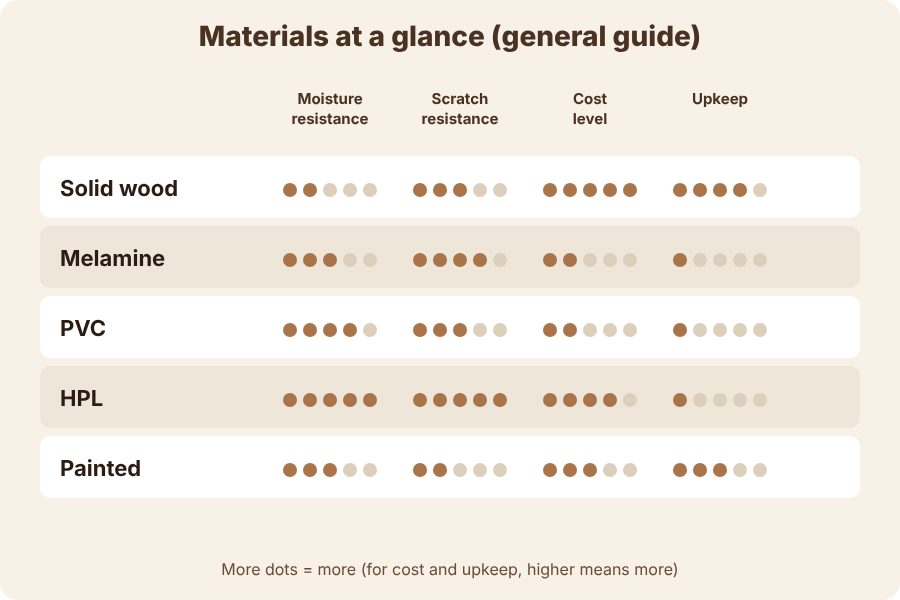
- Wood-look finishes: melamine, HPL and PVC can reproduce wood patterns at an accessible price, with strong resistance to scratches and moisture, and no need for periodic refinishing.
Dali focuses on PVC, melamine, HPL and painted doors, which give a wood look or a clean colour without the movement and upkeep of natural timber.
How wood behaves in Egyptian homes
Timber absorbs and releases moisture with the seasons, so it can swell in humid weather and shrink in dry heat. Good seasoning, a sound finish on all six sides of the leaf, and sensible clearances around the frame reduce problems. Avoid placing untreated wood doors in bathrooms and kitchens where steam is regular.
Caring for natural wood
- Dust with a soft cloth and wipe with a slightly damp one, then dry.
- Avoid harsh chemicals and abrasives that dull the finish.
- Refinish with a suitable lacquer or oil when the surface looks tired.
- Keep direct sun off the surface where possible, since strong light can fade or darken wood.
How to choose what suits your home
- Room: natural timber suits dry living areas and bedrooms; use moisture-resistant materials for bathrooms and kitchens.
- Climate and humidity: in coastal or damp locations, stable engineered or wood-look doors are safer than solid timber.
- Budget: solid hardwoods like teak and walnut are usually costly; a wood-look finish gives a similar mood for less.
- Family: with active children, a hard-wearing surface that resists scratches may suit better than soft pine.
- Style: light woods feel Scandinavian, mid-tones feel classic, and dark woods feel formal.
- Maintenance: real wood rewards care; if you prefer low upkeep, choose laminate or PVC finishes.
Browse the Dali shop to see wood-look and painted door finishes for every room.