Glass and Half-Glass Interior Doors: Light, Privacy and Safety
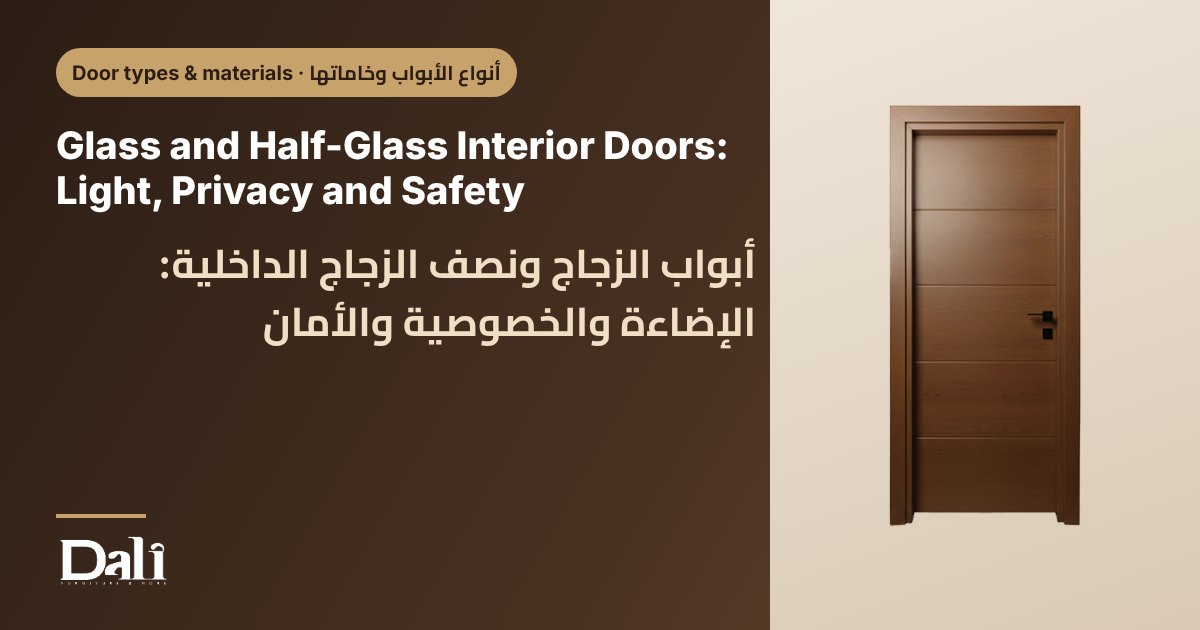
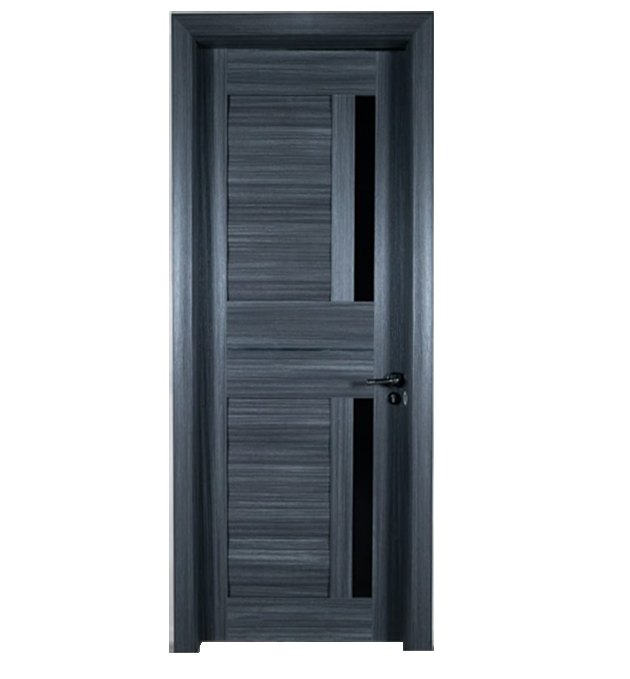
Many Egyptian apartments have dark corridors and rooms that receive little natural light. A glass or half-glass interior door can bring light deeper into the home and make small spaces feel larger, while still separating rooms. The trick is choosing the right glass, the right frame and the right room.
Types of glazed interior doors
- Full-glass doors: a glass panel in a slim frame or a frameless design. They are modern and bright but offer little privacy unless the glass is treated.
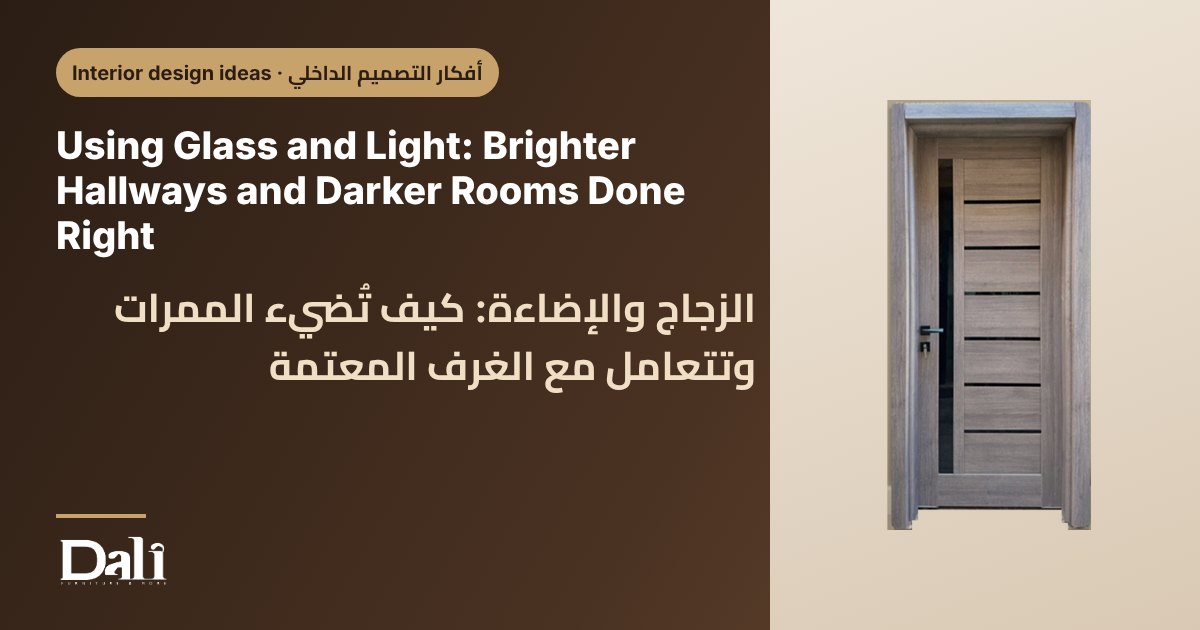
- Half-glass doors: a solid lower section, with glass in the upper half or in a central strip. They balance light and privacy and are more forgiving in daily use.
- Panel doors with glass inserts: traditional-style doors with one or more small glazed openings, often with decorative bars.
- Sliding glass doors: useful where a swinging leaf would take up too much room.
Choosing the glass
The type of glass affects safety, privacy and mood.
| Glass type | Look | Best for |
|---|---|---|
| Clear | Fully transparent, brightest | Living areas, home offices, dining rooms |
| Frosted or acid-etched | Soft, diffused, blurs the view | Bedrooms, bathrooms, corridors |
| Tinted or smoked | Darker, modern feel | Contemporary interiors |
| Patterned or textured | Decorative, hides details | Kitchens, traditional styles |
For safety, doors should normally use tempered or laminated safety glass rather than ordinary glass. Tempered glass is designed to break into small blunt pieces, and laminated glass tends to hold together when broken. This matters especially in homes with children, and around the lower half of a door where impact is likely.
Practical points to consider
- Privacy: clear glass shows silhouettes and light from the other side. For bedrooms and bathrooms, choose frosted glass or a half-glass design.
- Sound: glass does not block noise well, and gaps in a thin frame add to it. If quiet matters, a solid leaf is usually better.
- Weight: glass leaves are heavier, so they need strong hinges and a sound frame.
- Cleaning: fingerprints show on glass, especially near handles. Use a soft cloth and a mild glass cleaner.
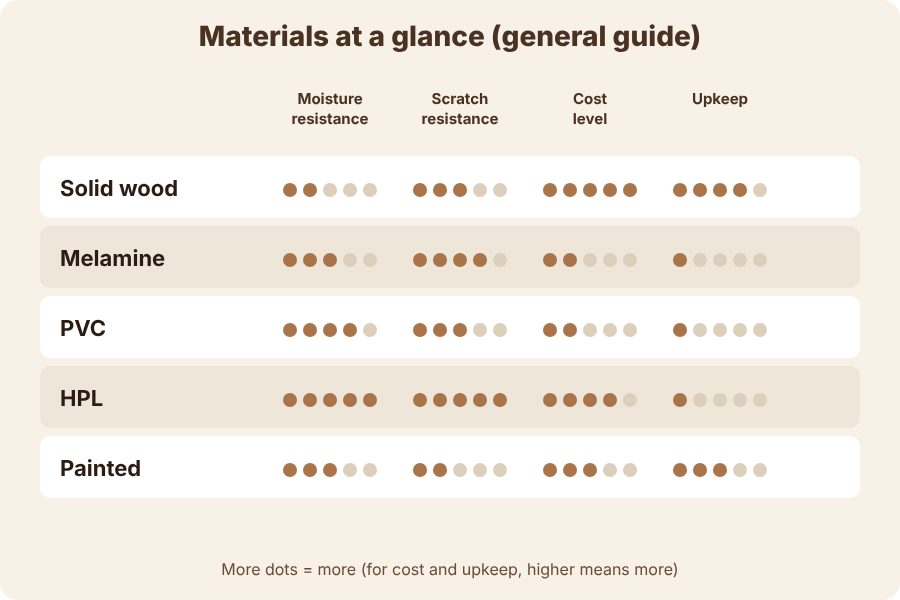
- Frame material: the frame around the glass can be PVC, wood-based with a melamine, HPL or painted finish, or metal, depending on the style you want.
Where glazed doors work best
They suit living-room and kitchen separators, dining areas, home offices and the entrance between a hall and a reception room. In a bathroom, use frosted glass and a water-resistant frame. In children's rooms, consider a half-glass design with a solid lower part to protect against knocks.
Common mistakes with glazed doors
The most frequent mistakes are choosing clear glass for a bedroom, forgetting that the glass makes the leaf heavier, and ignoring safety glass in family homes. Another is mixing very different frames in one corridor. Decide the glass type and frame style once for the whole home so that the doors look planned, not accidental.
Finally, check how the glass is held in the frame. Tight beads and a suitable gasket stop rattling when the door closes.
How to choose what suits your home
- Room: clear glass for shared spaces, frosted or half-glass for private rooms.
- Climate and humidity: in bathrooms and kitchens, choose water-resistant frames and ensure the glass is well sealed in its beads.
- Budget: half-glass doors with a standard frame are usually more affordable than large full-glass designs.
- Family: with young children, insist on safety glass and keep glazing above knee height where possible.
- Style: slim dark frames feel modern, while panelled frames with bars feel classic.
- Maintenance: expect to wipe the glass regularly; frosted finishes hide marks better than clear ones.
Visit the Dali shop to explore door finishes and frames that pair well with glass panels.