WPC and Composite Doors for Bathrooms and Wet Areas: What to Know
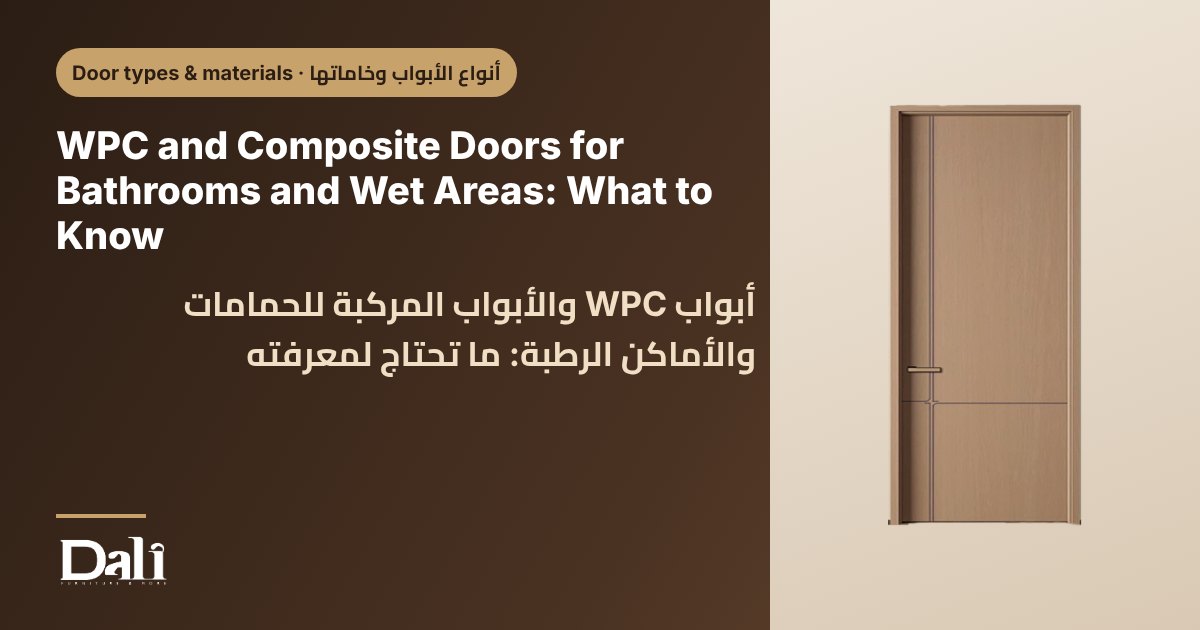
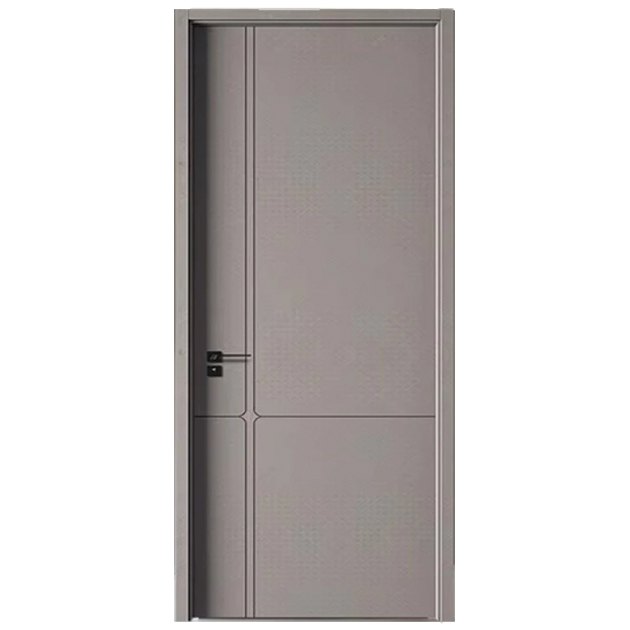
Bathrooms, laundry rooms and kitchens are the hardest places for a door. Steam, splashes and daily temperature swings can make an ordinary wooden door swell, peel or warp within a few seasons. That is why many homeowners look at WPC and other composite doors, which are designed to cope with moisture far better than plain timber.
What is a WPC or composite door?
WPC stands for wood-plastic composite. The core material is typically a blend of fine wood fibre or wood flour with a plastic polymer, formed into a dense, uniform board or profile. Because the plastic part does not absorb water the way natural wood does, the door is far less likely to swell at the edges or bottom when it gets wet.
In practice, the word composite is used loosely in the market. Some doors are fully WPC, while others combine a moisture-resistant core with a PVC or laminate skin. It is always worth asking the seller exactly what the core and the surface are made of, rather than relying on the name alone.
Why moisture is the real enemy
- Swelling: natural wood and ordinary particleboard absorb humidity and expand, causing the door to rub against the frame.
- Delamination: surface layers can lift when water reaches the glue line, especially at the bottom edge.
- Mould and odour: damp materials that stay wet are more likely to stain and smell.
- Rust: cheap hinges and screws corrode in humid rooms and stain the door around them.
A good wet-area door is therefore a system: a water-resistant leaf, a suitable frame, rust-resistant hardware and sensible installation.
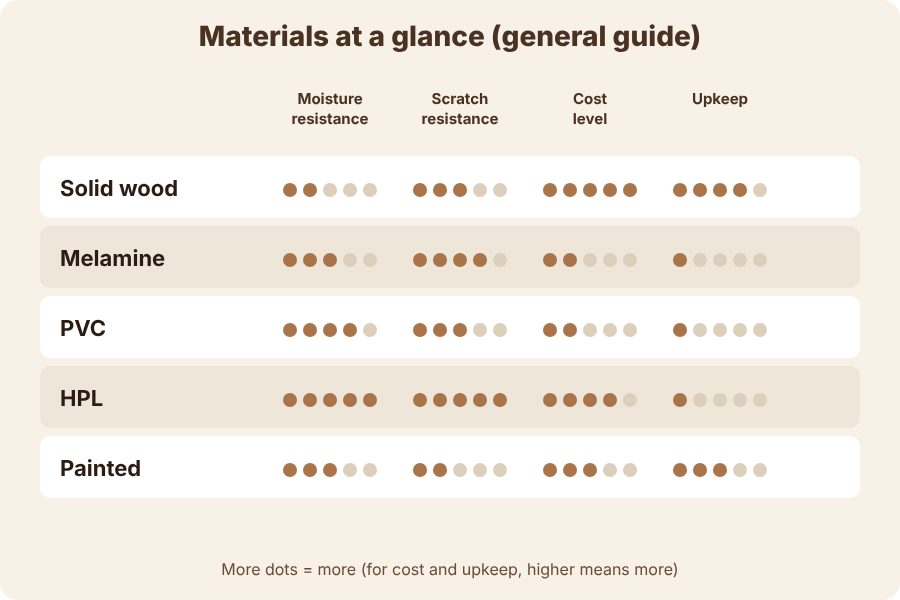
How the main options compare
| Material | Moisture behaviour | Typical use |
|---|---|---|
| WPC / composite | Very good; core does not absorb water easily | Bathrooms, laundry, balcony-side rooms |
| PVC | Very good; fully sealed surface | Bathrooms, kitchens, wet areas |
| HPL | Good if edges are well sealed | Bedrooms, living areas, kitchens with care |
| Melamine | Fine in dry rooms; edges are the weak point | Bedrooms, offices, dry areas |
| Painted wood-based | Depends on core and paint quality | Dry rooms, living areas |
PVC doors remain one of the most practical and economical answers for Egyptian bathrooms, and they are available in a wide range of finishes. WPC suits buyers who want a denser, more solid feel while keeping water resistance.
Installation details that make a difference
- Leave a small, even gap under the door so air can circulate, and never let the bottom edge sit in standing water.
- Choose stainless steel or other corrosion-resistant hinges, and use the screws supplied or matching ones.
- Seal any cut edges or drilled holes, for example after fitting a lock, so moisture cannot enter the core.
- Make sure the frame is suitable for wet rooms too; a good door in a swollen frame still sticks.
- Add ventilation, through a vent grille or a window, so the room dries after showers.
Looking after a wet-area door
Wipe the surface with a soft damp cloth and mild soap, then dry it. Avoid harsh abrasives and strong solvents that can dull the finish. Check the bottom edge and hinge screws every few months, and tighten anything that has loosened.
How to choose what suits your home
- Room: for a bathroom with a shower, prioritise PVC or WPC; for a guest toilet with little steam, a well-sealed HPL door can also work.
- Climate and ventilation: coastal or poorly ventilated bathrooms need the most water-resistant core you can get.
- Budget: PVC is usually the most economical wet-area choice; denser composites may cost more.
- Family: with children, choose a smooth, easy-to-wipe surface and rounded, secure hardware.
- Style: pick a finish that matches the other doors so the bathroom door does not look like an afterthought.
- Maintenance: if you want minimal upkeep, avoid raw or lightly sealed surfaces.
Browse the Dali shop to see our door finishes and choose the right option for your bathroom and wet areas.