Veneer Doors: A Real Wood Look Without the Weight and Cost
Many people love the look of real wood but hesitate because of the weight, the price and the way solid timber reacts to humidity. Veneer doors are a popular middle path: they put real wood on the surface and a stable engineered material underneath. Here is how they work and when they make sense.
What is veneer?
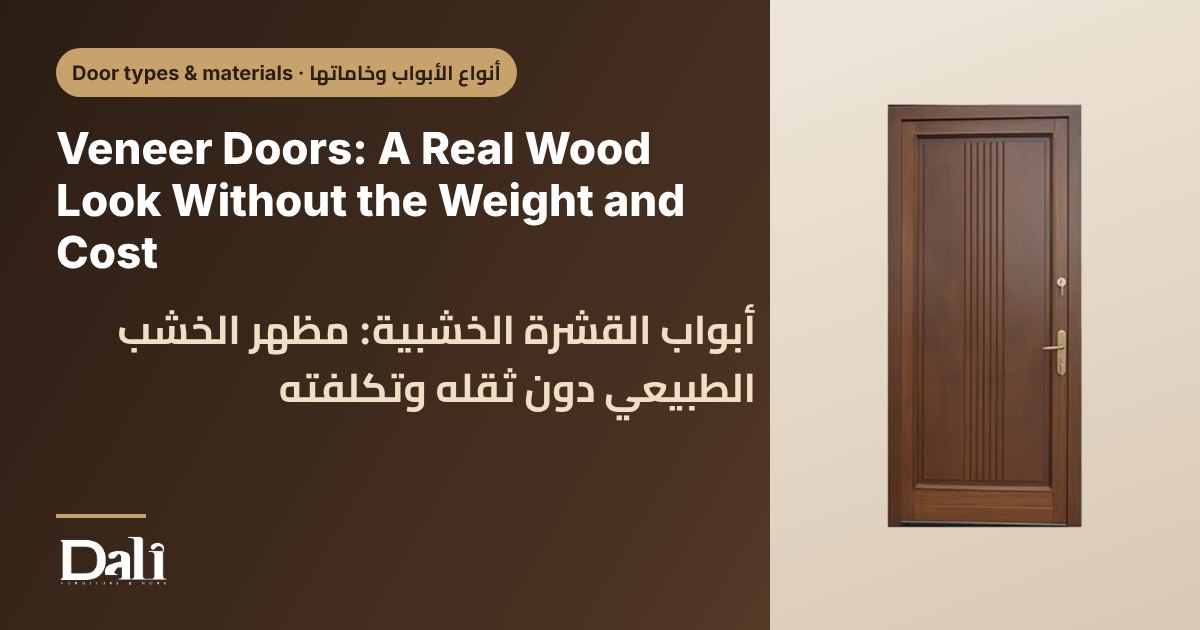
Veneer is a very thin slice of real timber, cut from a log and glued onto a core. Because it comes from actual wood, it shows genuine grain, texture and natural variation in color. The core is usually an engineered board or a framed structure, chosen for stability. After the veneer is applied, the surface is sanded and sealed with lacquer, oil or varnish to protect it and bring out the pattern.
Advantages of veneer doors
- Authentic appearance: the grain is real, not printed, which gives depth and warmth.
- Lower weight: a veneered door on an engineered core is usually lighter than solid timber of the same size.
- Better stability: the core is less likely to twist or crack than a thick plank, although humidity can still affect it.
- More economical use of timber: one log can cover many doors, which is why veneer is generally cheaper than solid wood.
- Harmony: doors, frames and matching furniture can share the same wood tone.
Limits to know before choosing
Since the wood layer is thin, it cannot be sanded back many times like solid timber, so deep scratches and damage may be difficult to repair. Natural wood varies, so two doors cut from different logs may not match perfectly; if you need a uniform look, ask to see doors from the same batch. Sunlight can slowly change the tone of wood, and veneer needs a good protective coating, particularly in humid rooms or where the edges are exposed. For bathrooms and kitchens, a moisture-friendly surface such as PVC or HPL is usually the safer option.
| Point | Veneer | Solid wood | Printed surface (melamine) |
|---|---|---|---|
| Grain | Real wood | Real wood | Printed pattern |
| Weight | Lighter | Heavy | Light |
| Cost | Mid to higher | Higher | Usually lower |
| Repairability | Limited sanding | Can be sanded several times | Limited |
| Uniformity | Natural variation | Natural variation | Very uniform |
It also helps to ask which wood species is used, how thick the veneer layer is and how the edges are covered, because these details show how carefully the door has been made.
Caring for veneer
Dust with a soft dry cloth and wipe marks with a slightly damp one, drying at once. Avoid soaking, scouring pads and strong cleaners. Keep the door away from direct heat sources and, where possible, shade it from strong sun. If the finish becomes dull, a suitable furniture polish or refinishing by a professional can refresh it.
How to choose what suits your home
- Room: veneer suits bedrooms, studies, living rooms and entrance halls; avoid it for wet rooms.
- Climate: in humid or coastal homes, ask about the core, edge sealing and the type of coating used.
- Budget: veneer often offers a good balance when you want the look of timber without paying for full solid wood.
- Family: with young children and heavy use, consider whether a harder surface might be more practical for some rooms.
- Style: light woods feel modern and airy, while darker tones feel classic; match the tone to your floor and furniture.
- Maintenance: if you enjoy caring for natural materials, veneer rewards gentle, regular attention.
Visit the Dali shop to compare wood-look doors and find the surface that suits each room.