HPL Doors: The Tough, Moisture-Resistant Option for Busy Homes
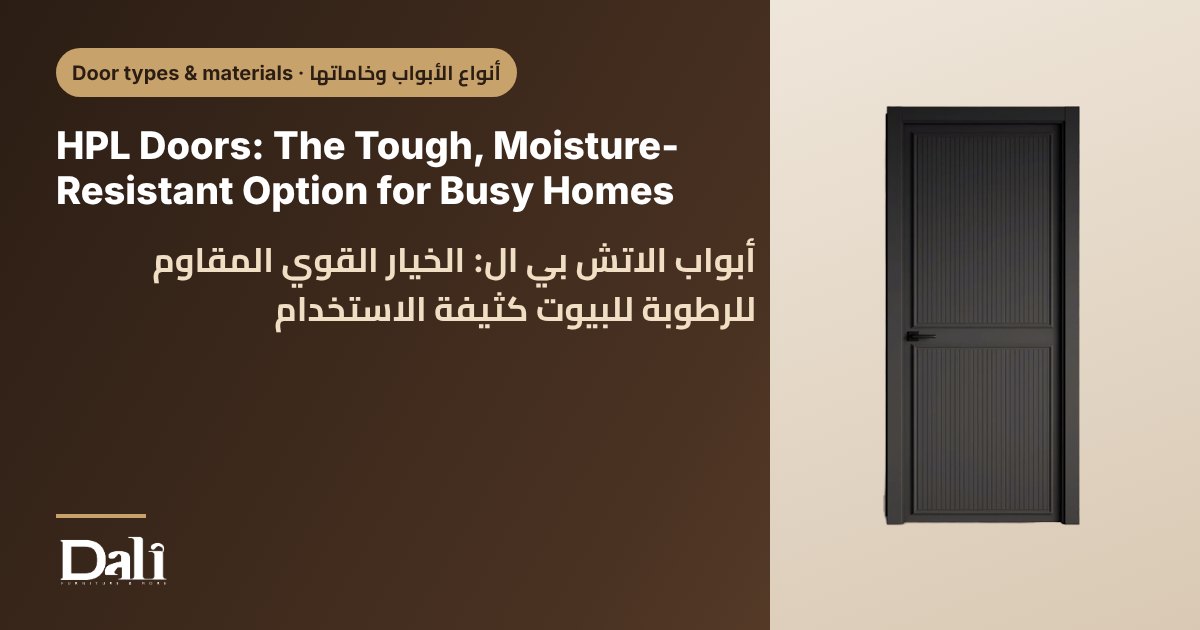
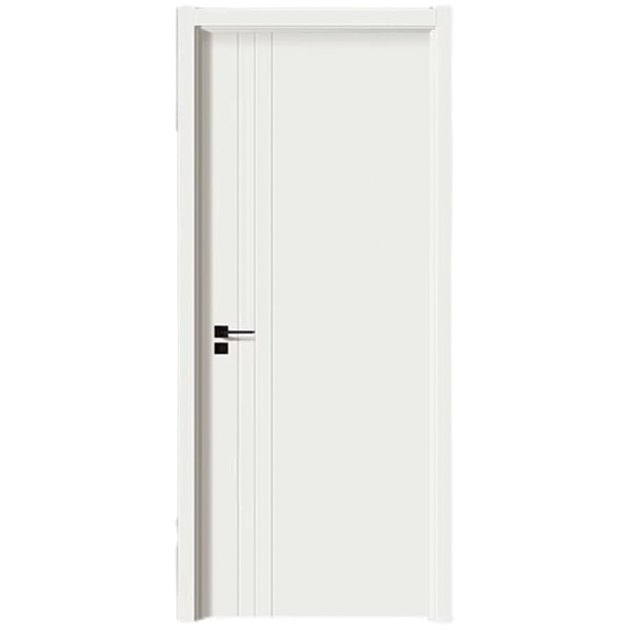
If you want a door that can take knocks, splashes and daily wear without looking tired, HPL is one of the first surfaces to consider. It is less widely known than melamine or paint, so this guide explains what HPL is, how it behaves and where it earns its place in a home.
What is HPL?
HPL stands for high-pressure laminate. It is made by stacking layers of paper, usually several layers of kraft paper soaked in resin, topped with a decorative layer, and pressing the stack under high heat and high pressure. The result is a dense, hard sheet that is then bonded to the door core. Some products go further and use thick HPL panels that are solid laminate throughout, usually called compact laminate, but most doors use HPL as a surface over an engineered core.
Why HPL is considered tough
- Scratch and wear resistance: the surface is hard and typically handles daily contact better than many thinner coverings.
- Impact tolerance: it copes well with knocks from furniture, bags and toys.
- Moisture resistance: the laminate surface does not absorb water, so splashes and steam do not harm it.
- Easy cleaning: its dense, sealed surface wipes clean with a damp cloth and mild soap.
- Stable color: many HPL designs keep their color well and do not need repainting.
HPL, melamine and PVC at a glance
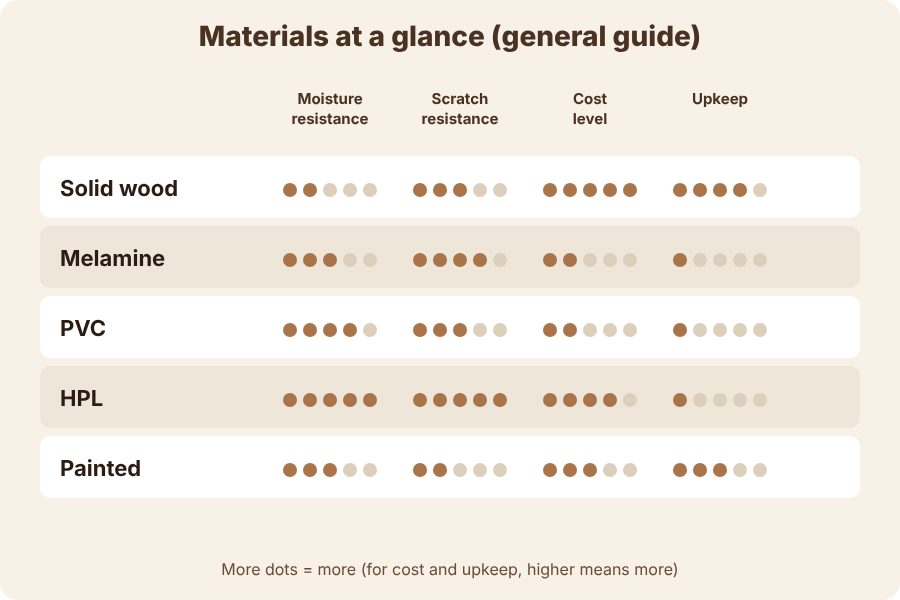
These three surfaces are often compared, and each has its place. The table below gives a general picture; actual performance depends on the quality of the product and the core.
| Point | HPL | Melamine | PVC |
|---|---|---|---|
| Surface hardness | Very good | Good | Moderate |
| Moisture | Very good surface | Depends on edges | Very good surface |
| Impact | Strong | Medium | Medium |
| Typical cost | Often higher | Often lower | Often mid-range |
| Typical use | Heavy-use and wet rooms | Dry rooms | Wet rooms and general use |
Limits to keep in mind
Even tough surfaces have weak points. The edges and the core still matter: if the core is a fiberboard and its edges are left unprotected, water can enter from the sides or bottom, so ask how the edges are finished. HPL can chip along a corner under a hard blow, and once damaged it is difficult to repair invisibly. It is also a heavier and often costlier choice than a simple film, so it makes the most sense where its strength is actually used.
Where HPL shines
HPL is a smart choice for bathrooms, kitchens, laundry rooms, children's rooms, corridors with heavy traffic, and rental or family apartments where doors are used constantly. It also suits shared or commercial-style spaces inside the home, such as a home office with visitors.
How to choose what suits your home
- Room: choose HPL for wet or high-traffic areas such as bathrooms, kitchens and children's rooms, where its toughness pays off.
- Climate: in humid or coastal homes, HPL's moisture resistance is a real advantage, as long as the edges are well sealed.
- Budget: if the price is a concern, use HPL where it matters most and a simpler surface in quiet, dry rooms.
- Family: with active children and pets, a hard surface that wipes clean saves effort over the years.
- Style: HPL comes in plain colors and wood-look designs; choose a matte or lightly textured surface to hide fingerprints.
- Maintenance: clean gently with a damp cloth and avoid abrasive pads that could scuff the finish.
Explore the Dali shop to see HPL doors and decide which rooms deserve the toughest surface.